
ROSE Test
The ROSE test (Resistivity of Solvent Extract) is a well-established testing method for evaluating ionic contamination on printed circuit boards and electronic assemblies. It provides a quick overview of whether the ionic cleanliness meets defined requirements.
Table of Contents
- The risk of ionic contamination on printed circuit boards (PCBs)
- What does the ROSE test reveal?
- Ionic contamination measurement at Quality Analysis
- ROSE test according to IPC-TM-650 2.3.25
- How does ionic contamination measurement work?
- Typical applications: When is a ROSE test recommended?
- Frequently asked questions about the ROSE test
- At a glance: The ROSE test

Contact us –
expert support is just a conversation away.
Using state-of-the-art analytical methods, we assist you with quality issues, damage claims, and development challenges – providing precise, well-founded, and solution-oriented support.

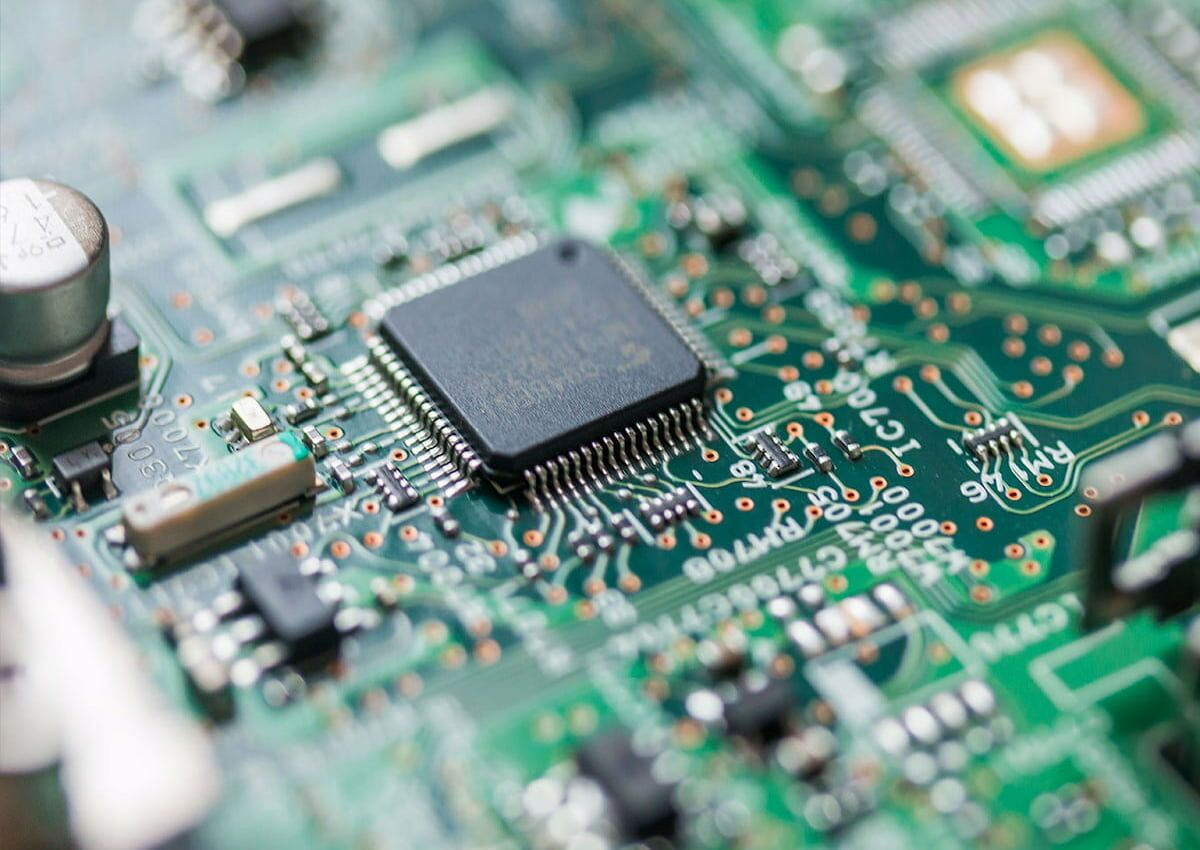
The risk of ionic contamination on printed circuit boards (PCBs)
Ionic residues are often caused by flux, cleaning chemicals, process media, or environmental factors. If these residues remain on printed circuit boards (PCBs) or electronic assemblies, they can compromise electrical reliability. The situation becomes particularly critical when moisture, voltage, and ionic contaminants interact. This can lead to leakage currents, corrosion, electrochemical migration, or dendritic growth. The result is malfunctions, failures, or damage that are often difficult to trace to a specific cause during subsequent operation.
What does the ROSE test reveal?
The ROSE test provides a quick initial assessment of the total ionic contamination. This allows for early detection of whether residues from manufacturing, the soldering process, cleaning, or handling could pose a risk to future reliability. However, the method does not determine which specific ion species are present or where they originate.
It should also be noted that the ROSE test detects only those ionic residues that are extractable under the selected conditions. Residues that are poorly soluble or difficult to access cannot therefore be fully accounted for.
ROSE Test vs. Ion Chromatography
In practice, the ROSE test is often the first step. If the measured value is abnormal or if the cause of a contamination needs to be investigated more closely, Ion Chromatography (IC) can provide a more in-depth assessment. It analyzes individual ions both qualitatively and quantitatively. This allows for a more precise determination of which residues are present and what possible causes are under consideration.
Ionic contamination measurements
at Quality Analysis
Quality Analysis supports electronics manufacturing companies with contamination analysis and printed circuit board testing. Depending on the specific requirements, we combine the ROSE test with other analytical methods.
- Testing according to established IPC test methods such as IPC-TM-650 2.3.25
- Rapid assessment of total ionic contamination on printed circuit boards and assemblies
- Supplementary Ion Chromatography (IC) for the qualitative and quantitative determination of individual ions
- Practical evaluation of measurement results for quality assurance, process optimization, and damage prevention
- Cross-method analysis through the combination of different testing procedures
- Customized consultation on the appropriate testing method, sample size, and level of detail in reporting
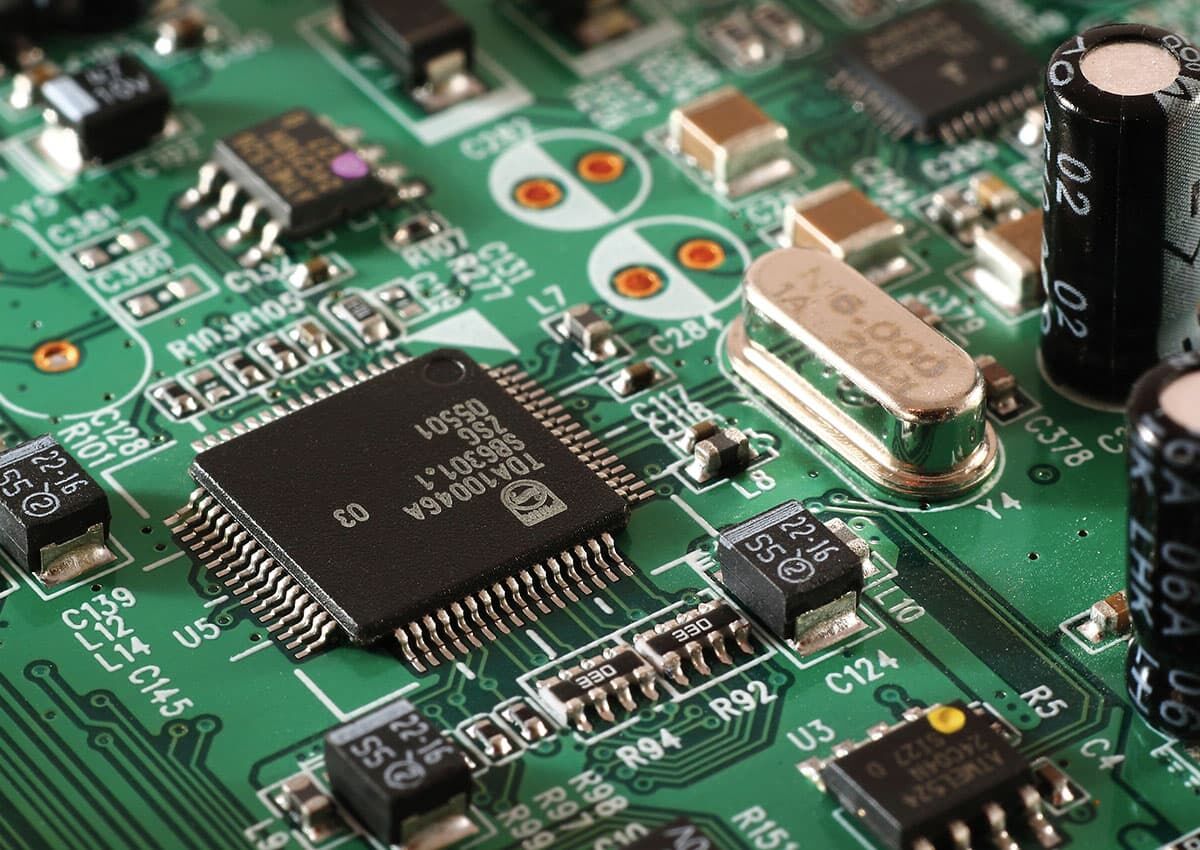
ROSE test according to IPC-TM-650 2.3.25
Ionic contamination testing is often performed in accordance with IPC-TM-650 2.3.25. This IPC test method describes how total ionic contamination on printed circuit boards and electronic assemblies is evaluated based on the conductivity of an extraction solution. The ROSE test thus provides a standardized measurement value that can be used for process control, production monitoring, and the evaluation of cleanliness requirements.
It is important to note that IPC-TM-650 2.3.25 provides the testing framework. The applicable limit values depend on the product, application, customer requirements, process specifications, and risk analysis.
How does ionic contamination measurement work?
In the ROSE test, soluble ionic residues are extracted from printed circuit boards or electronic assemblies and evaluated based on the solution's conductivity.
ROSE Test Procedure
First, the printed circuit board (PCB) or electronic assembly to be tested is brought into contact with a defined extraction solution. Depending on the test setup, this is done by immersion, rinsing, or another defined extraction method. During this process, ionic residues are released from the surface and transferred into the liquid.
The conductivity or resistance of the solution is then measured. The more ionic components the solution contains, the greater the change in the measured value. The total ionic contamination is calculated from this value and reported as a comparable summary parameter.
What does the result mean?
The result of a ROSE test is often expressed in µg of NaCl equivalent per cm². This value does not mean that sodium chloride is actually present on the printed circuit board or assembly.
The NaCl equivalent describes the conductivity that the dissolved residues would cause compared to an equivalent amount of sodium chloride. The value thus serves as a benchmark for the total ionic load.
Typical applications: When is a ROSE test recommended?
In electronics manufacturing, there are several stages where it is worth paying attention to ionic cleanliness: from process approval to ongoing production monitoring to failure analysis.
Process Control in Electronics Manufacturing
The ROSE test supports the regular monitoring of manufacturing and cleaning processes. This allows changes in ionic cleanliness to be detected early on.
Cleaning Validation
When a cleaning process is introduced, modified, or reviewed, the ROSE test provides a quantitative basis for the initial assessment of cleaning effectiveness and for process monitoring.
Incoming Goods Inspection
For delivered printed circuit boards or assemblies, the ROSE test can help assess ionic cleanliness prior to further processing. This allows anomalies to be detected early and facilitates better comparison of supplier batches.
Production Monitoring
For production-run printed circuit boards or assemblies, contamination measurement in accordance with IPC-TM-650 2.3.25 can be used as a spot check to regularly monitor cleanliness.
Failure Analysis and Complaints
If unexplained electrical malfunctions occur, testing can provide clues as to whether ionic contamination might be a possible cause.
Preparation for Subsequent Process Steps
Before coating, potting, bonding, or other downstream processes, the ROSE test can help evaluate critical residues on the surface.
Frequently asked questions about the ROSE test
The ROSE test is a testing method used to measure soluble ionic residues on printed circuit boards and electronic assemblies. ROSE stands for Resistivity of Solvent Extract. The test is often performed in accordance with IPC-TM-650 2.3.25.
The measurement determines the total ionic contamination on a surface. The result is usually expressed as sodium chloride equivalent per unit area, for example, in µg NaCl equivalent/cm². The method provides a total value; it does not break down the individual ion species.
The ROSE test is primarily used on printed circuit boards, assembled modules, and electronic components. This test is particularly relevant when evaluating residues from soldering, cleaning, or manufacturing processes.
The evaluation depends on the product, application, customer requirements, and process specifications. General threshold values should therefore not be considered in isolation. The decisive factor is whether the measured total ionic load meets the requirements of the respective assembly.
The ROSE test is often performed in accordance with IPC-TM-650 2.3.25. This IPC test method describes the evaluation of total ionic contamination based on the conductivity of an extraction solution.
The ROSE test provides a total score for overall ionic contamination. Ion chromatography analyzes individual ion species both qualitatively and quantitatively. This makes it particularly suitable when the nature and possible origin of the residues need to be determined more precisely.
When combined with moisture and electrical voltage, ionic residues can promote leakage currents, corrosion, or electrochemical migration. This can lead to malfunctions or failures in electronic assemblies.
This test is useful, for example, for process monitoring, after soldering, for validating cleaning processes, during production inspections, or as part of a failure analysis in cases of unexplained electrical malfunctions.
At a glance: The ROSE Test
The ROSE test (Resistivity of Solvent Extract) is a fast and proven method for evaluating ionic residues on printed circuit boards and electronic assemblies. This analytical method provides a summary value for ionic cleanliness and thus supports quality assurance, process control, and failure analysis in electronics manufacturing. For a detailed evaluation of individual ions, the ROSE test can be supplemented with Ion Chromatography. Quality Analysis combines both methods with additional analytical techniques as needed to not only measure residues but also evaluate them in the context of your process and specific questions.