

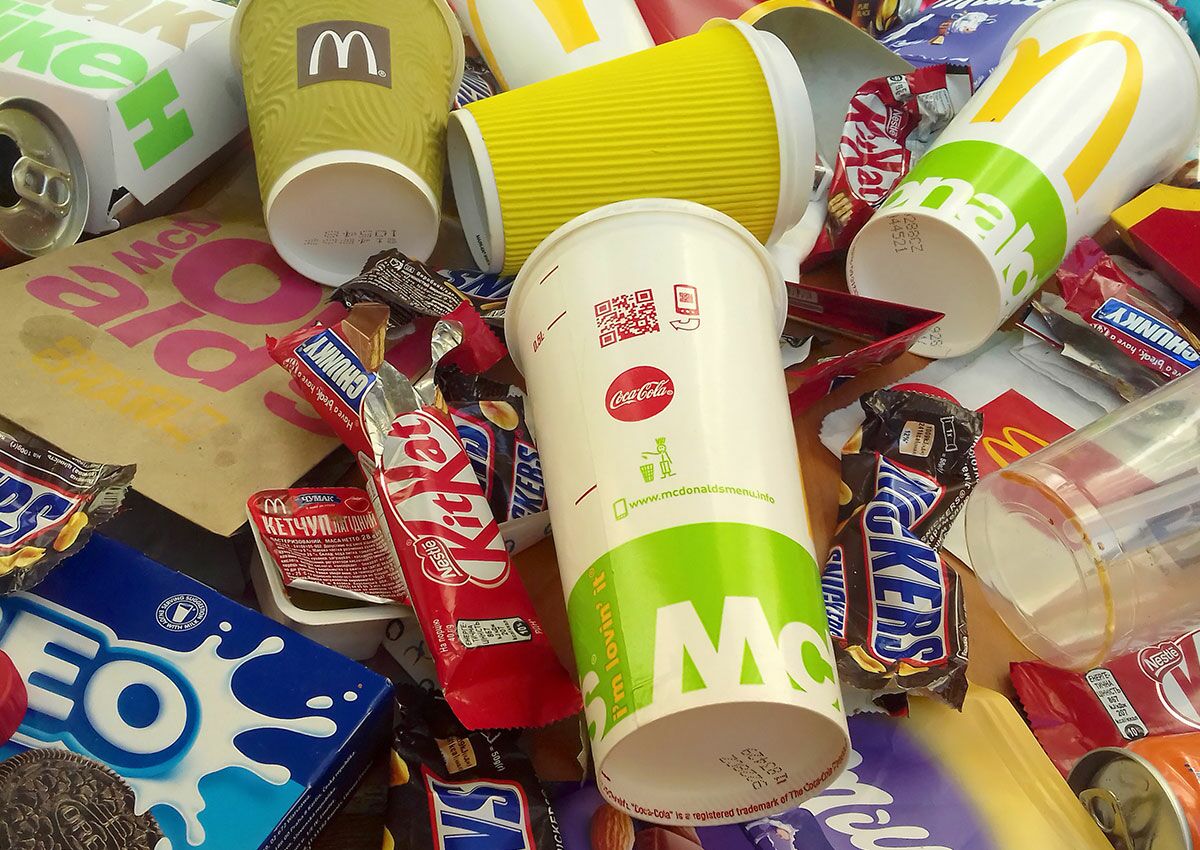
Analytics for Safe and Compliant Packaging
Hardly any other sector is currently subject to as much regulatory scrutiny as packaging materials. The EU Packaging Regulation (PPWR) and the REACH Regulation impose strict requirements on material composition, the use of critical substances, and documentation of compliance.
As a testing laboratory accredited according to DIN EN ISO/IEC 17025 we support manufacturers in the analytical evaluation of packaging materials—from plastics, paper composites, and metals to complex multilayer packaging. We specifically test materials for PFAS, heavy metals, plasticizers, fillers, and other regulated substances and provide reliable analytical data for technical documentation, quality assurance, and regulatory assessments.
In addition, our analyses support the development of recyclable packaging by providing transparency regarding material compositions, additives, and composite structures. From material selection to product development and quality assurance, we support companies with in-depth analytics on their path to safe and compliant packaging .
Fast and reliable analysis
of packaging materials
- Fast, precise testing for freedom from halogens (fluorine, chlorine, bromine and iodine)
- Analysis of the total fluorine content (TF) and the sum parameters TOF, AOF and EOF for the evaluation of the overall levels of PFASs
- Precise quantification of halogens and sulfur in a wide range of sample matrices using Combustion ion chromatography (CIC)
- Analysis of heavy metals such as lead and lead compounds using ICP-OES
- Plastics inspection with the focus on plasticizers, filler materials and additives
- Investigation of complex composite and multilayer packaging with regard to material composition, additives, and critical ingredients
- Analysis of the thermal decomposition behavior
- Determination of the water content of samples using Karl Fischer titration (KFT)
- Analysis for solvents and volatile organic compounds (VOCs)
- Test reports with reliable analytical data for technical documentation and compliance verification
Which type of analysis is appropriate for which research question?
| Research Question | Analytical Methods |
|---|---|
| Determine halogen or fluorine content | CIC |
| Examine fluor's total parameters | TF / TOF / AOF / EOF – depending on the matrix and the research question |
| Determine element and heavy metal concentrations | ICP-OES |
| Examine plasticizers, solvents, or selected organic compounds | GC-MS / GC-FID |
| Characterizing the thermal properties of materials | DSC / TGA |
| Determine the water content |
Karl Fischer Titration |
| Examine material composition, coatings, and surfaces |
Microscopy / SEM EDX / Materialography |
The right test method for every analysis
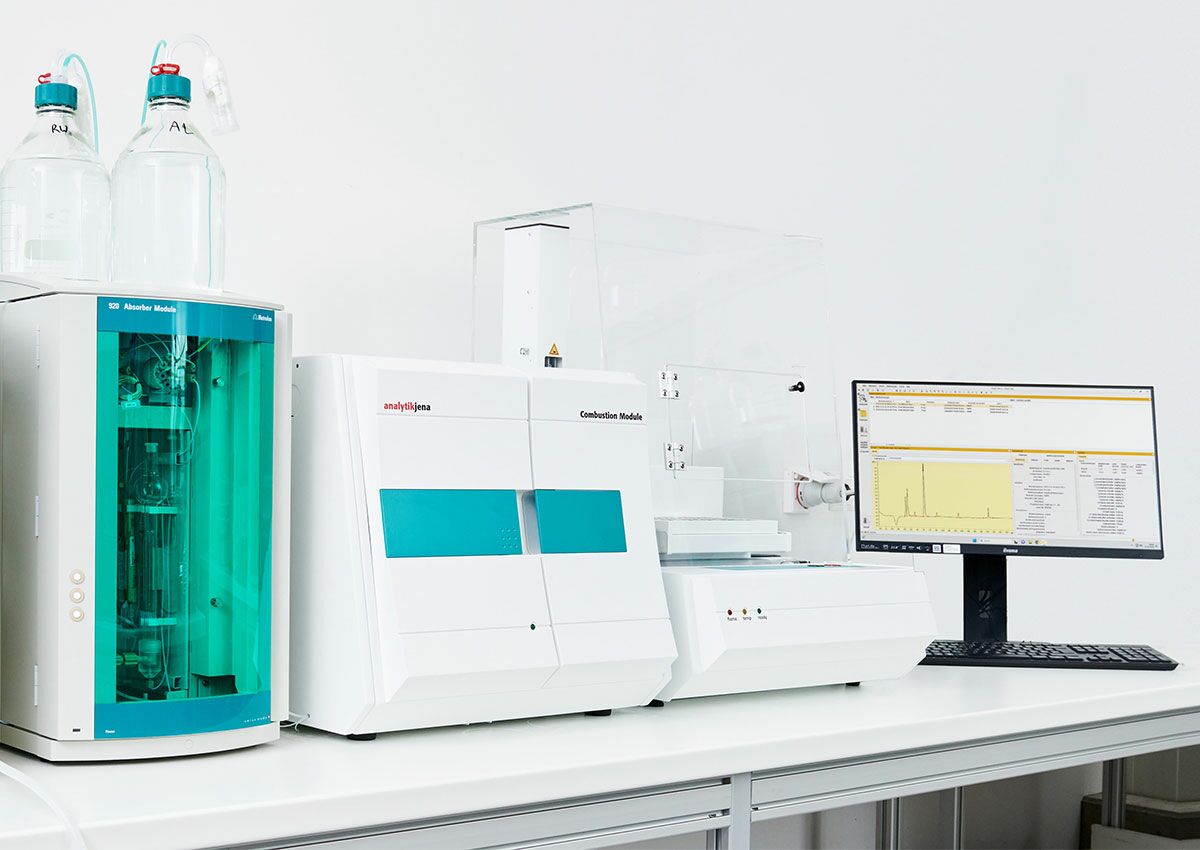
Combustion ion chromatography (CIC)
Using Combustion ion chromatography (CIC), we quickly and reliably analyze packaging materials for halogen-containing compounds (F, Cl, Br, I) and sulfur compounds. The determined fluorine content, expressed as a total parameter (Total Fluorine TF), can serve as an indication of the possible presence of PFAS “forever chemicals”. The method is suitable for plastics, paper composites, and other combustible samples. It provides precise quantitative results for halogens and sulfur and is used for quality control of raw materials, intermediate products, and end products, as well as to verify compliance with regulatory requirements.
Theromogravimetry (TGA)
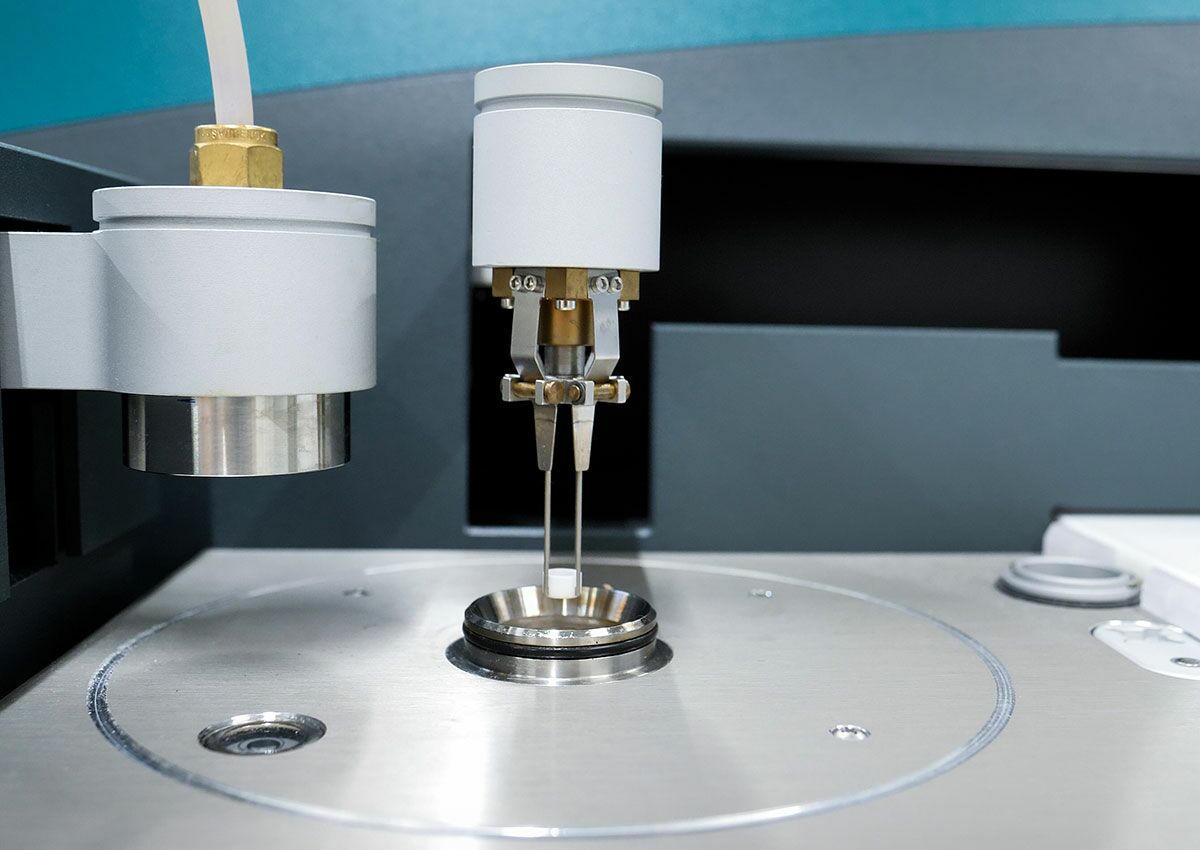
Using Thermogravimetry (TGA), we analyze the thermal stability and composition of packaging materials. The method precisely determines the proportion of organic and inorganic components, detects decomposition processes and acquires material losses, e.g. due to volatile constituents. In packaging analytics, TGA provides important information about additives, filler materials or other REACH-relevant substances and thus supports quality assurance and the evaluation of recyclability.
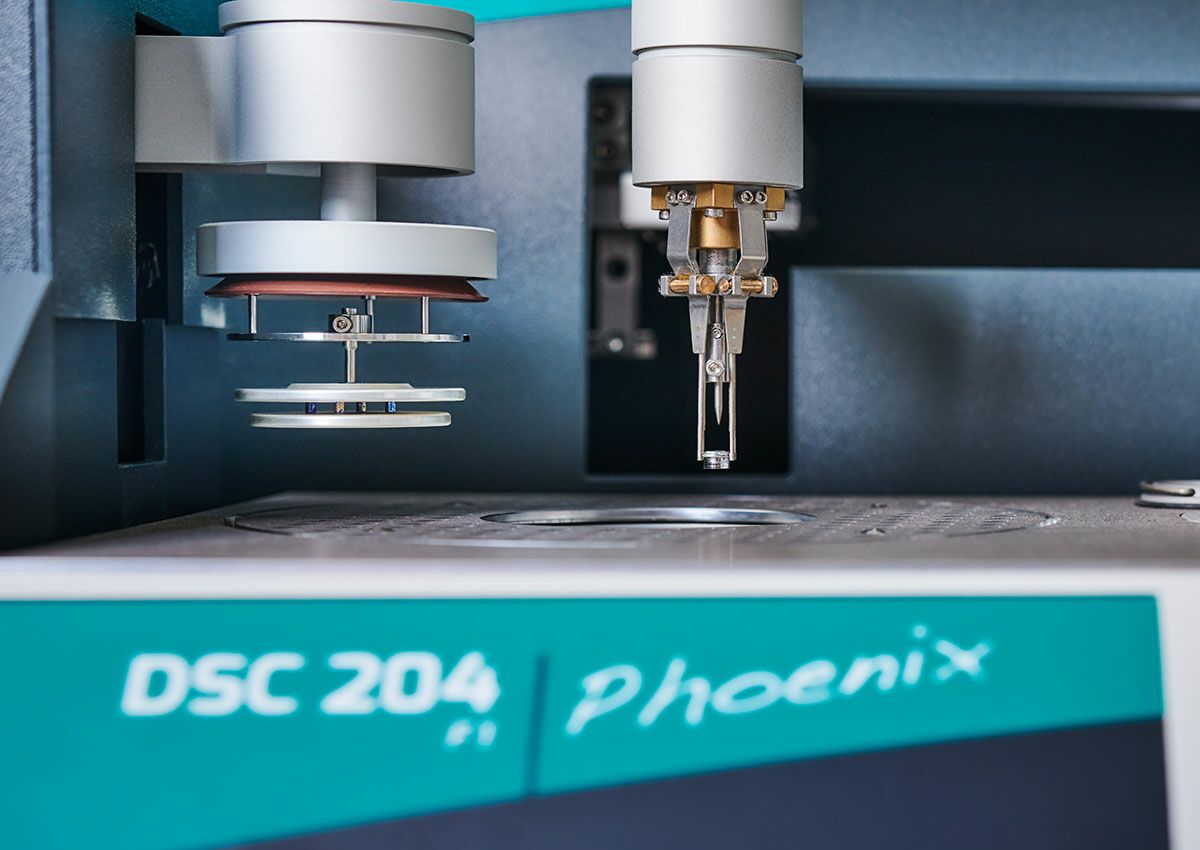
Differential scanning calorimetry (DSC)
Differential scanning calorimetry (DSC) is an effective technique for analyzing the thermal characteristics of packaging materials. It determines melting points, glass transition and decomposition temperatures; it also provides important information about material identification, purity and processing quality. In packaging analysis, this technique helps to detect material changes caused by additives, plasticizers or other REACH-relevant substances. In this way statements can be made about suitability for food contact, long-term stability and recyclability.
Karl Fischer titration (KFT)
Karl Fischer titration (KFT)is a highly sensitive method for determining the water content in packaging materials. It permits the precise analysis of plastics, paper composites and other hygroscopic materials to control moisture as a potential influencing factor on product safety, food compatibility and material stability. KFT is used for both quality assurance and checking conformity with the EU Packaging Regulation and the REACH Regulation.
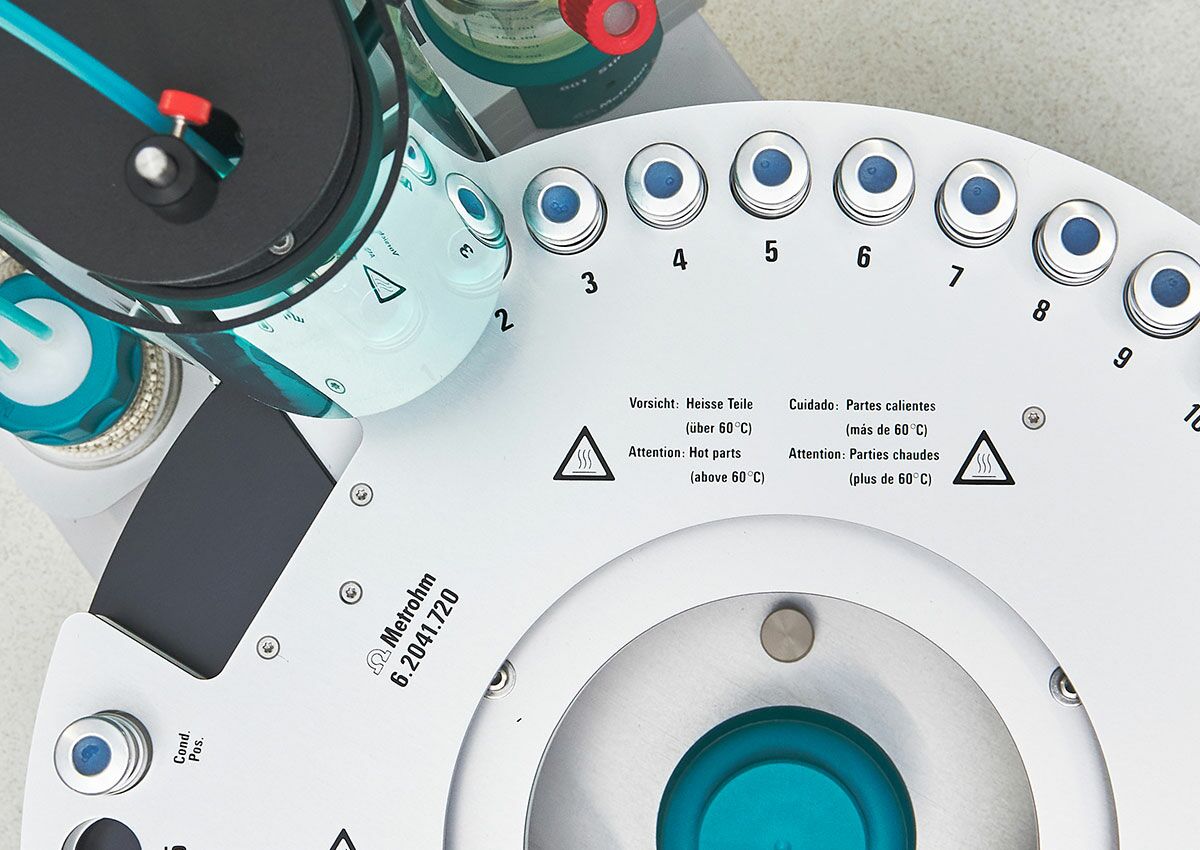
Gas chromatography (GC-MS & GC-FID)
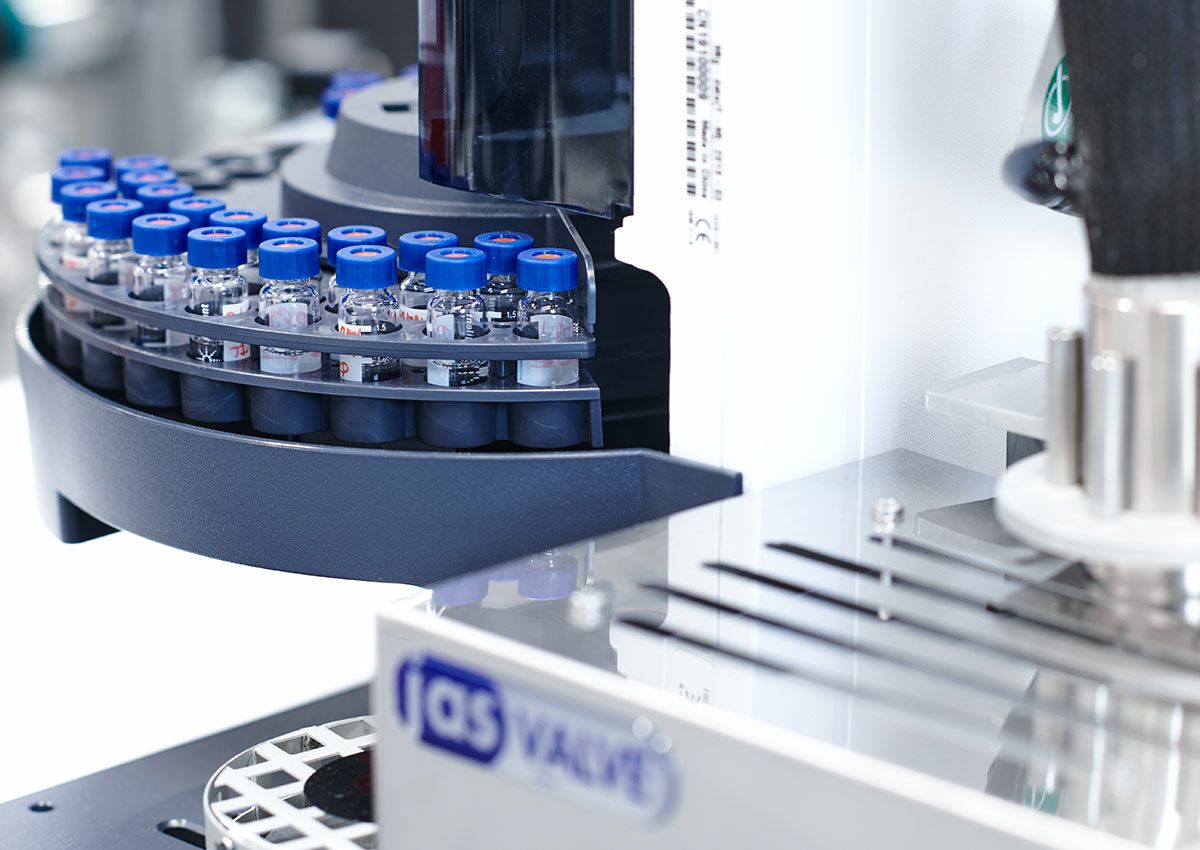
Optical emission spectroscopy with inductively coupled plasma (ICP-OES)
We use ICP-OES to analyze packaging materials specifically for their inorganic elements, in particular metals and certain non-metals. The method permits the reliable determination of heavy metals such as lead, cadmium or chromium (VI) as well as other REACH-relevant elements. In this way, statutory limits can be reliably checked and conformity as per the EU Packaging Regulation verified.
Frequently asked questions about the topic of packaging analytics
The abbreviation REACH stands for registration, evaluation, authorization and restriction of chemicals. This is the European Union's comprehensive regulation on chemicals (Regulation (EC) No. 1907/2006).
Packaging tests help to identify hazardous or regulated substances such as PFASs, plasticizers and heavy metals in packaging materials. This information is crucial for compliance with the REACH Regulation and the EU Packaging and Packaging Waste Regulation (PPWR), which place clear requirements on constituents, recyclability and product safety. Without sound analyses, there is a risk of recalls, market bans or liability issues.
The Packaging and Packaging Waste Regulation (PPWR) establishes mandatory requirements for packaging throughout Europe. The goal is to reduce packaging waste, improve recyclability, and limit the use of hazardous substances. For manufacturers, this means, among other things, evaluating material compositions, complying with substance restrictions, and documenting compliance with legal requirements through appropriate evidence. Analytical testing provides an important basis for this.
Above all, the focus is on PFASs (per- and polyfluoroalkyl substances), heavy metals (e.g. lead, cadmium), plasticizers (e.g. phthalates), flame retardants, solvents containing VOCs as well as substances containing nonylphenol. Coatings containing fluorine on paper or cardboard packaging are also increasingly coming into focus. These substances are considered hazardous to the health and extremely persistent; they are therefore subject to strict limits.
NIAS stands for "Non-Intentionally Added Substances". These substances include by-products and decomposition products, impurities or residues, which can occur in particular in plastics with food contact or in recycled materials. The NIAS test identifies these substances and evaluates possible health risks. According to EU regulations, this test is an essential part of the verification of conformity for food packaging.
You might also be interested in
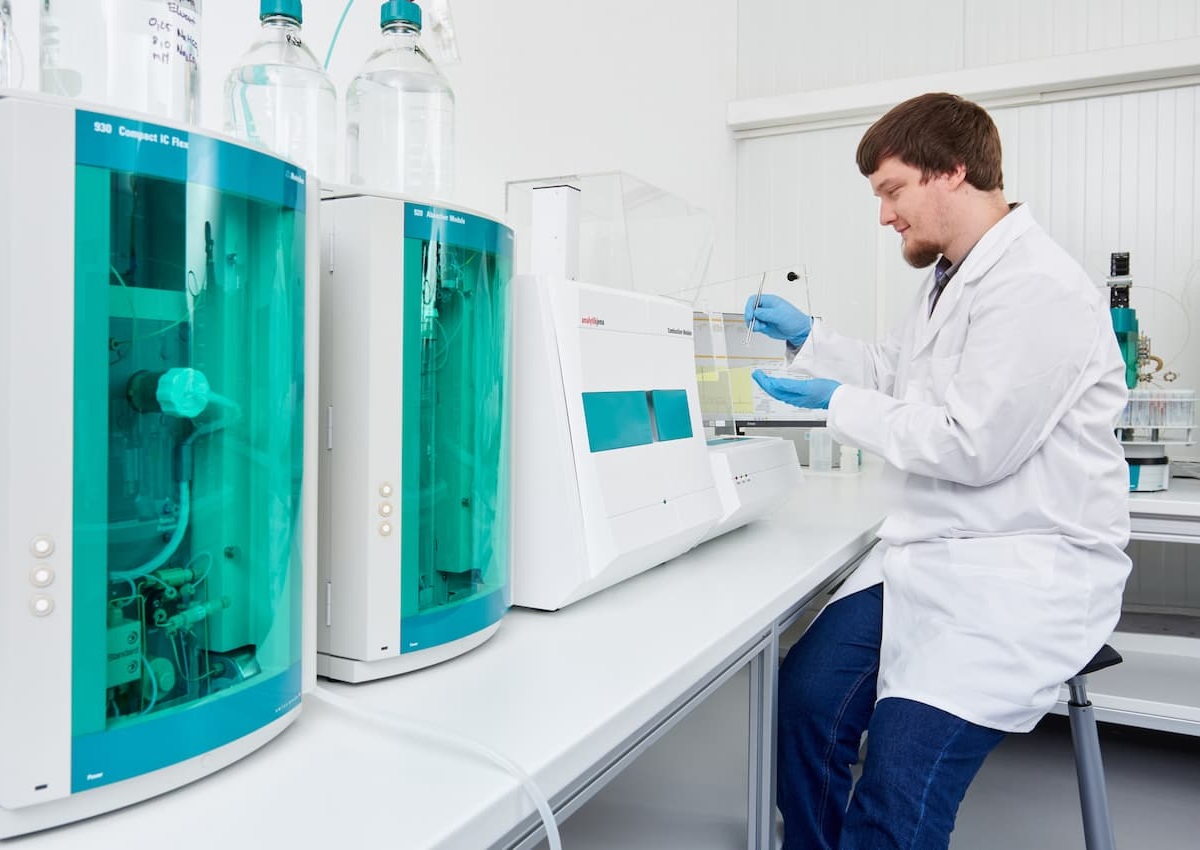
Depending on the matrix and the objective of the analysis, total fluorine parameters can provide indications of fluorine-containing compounds and potential PFAS contamination.

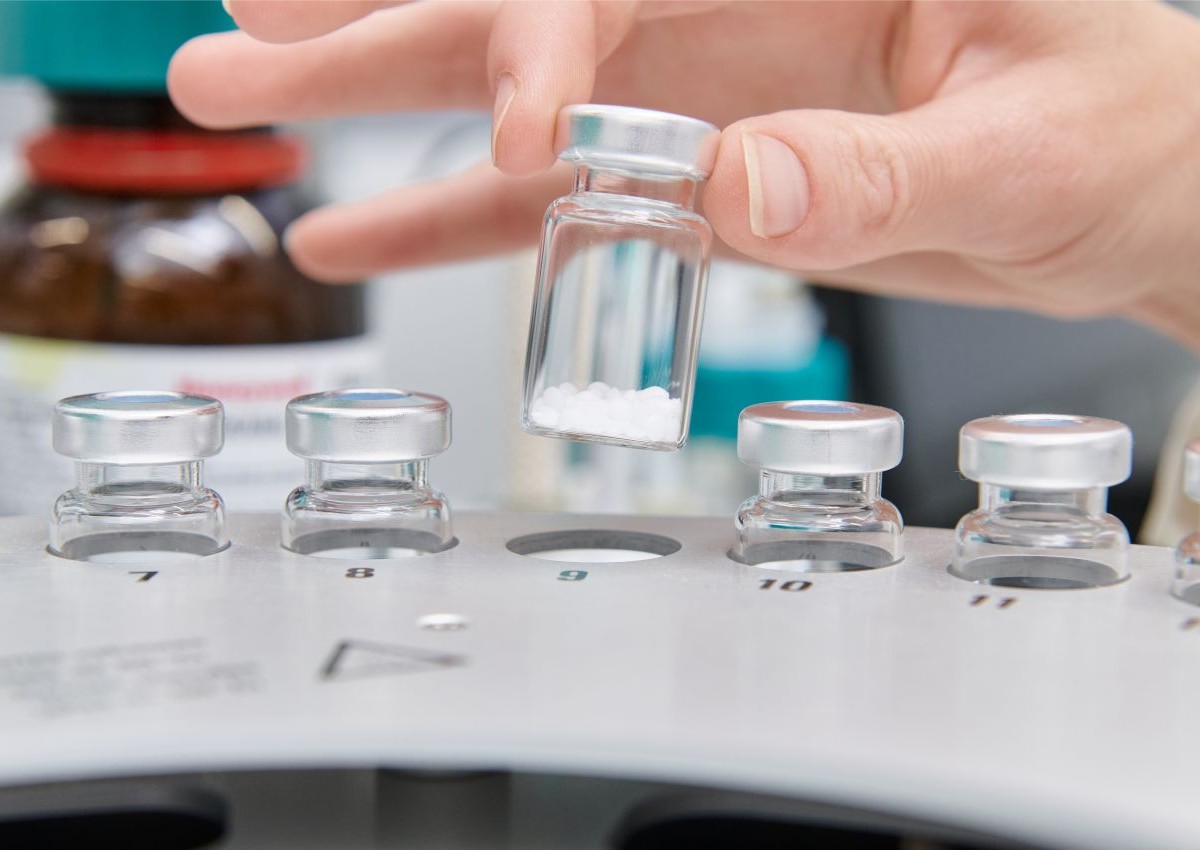
Added value at Quality Analysis
Speed
You receive from us precise measurement results, even at short notice. We have both the necessary personnel and a large number of analysis systems for the precise analysis of packaging materials.
Variety of analyses
We analyze organic and inorganic substances using various analytical methods in the areas of microscopy, spectroscopy, chromatography, thermal and wet-chemical analytics.
Analysis systems
Our technical equipment is suitable for all requirements related to packaging analytics. We rely on market leaders such as Spectro, Metrohm, Netzsch, Bruker, Agilent, Hach as well as many others.
Accreditation
The Accreditation of our inspection methods and measuring rooms signifies for you certainty, dependability and objectivity.
Accredited test laboratory
for packaging analytics
Our DAkkS accreditation in accordance with DIN EN ISO/IEC 17025 stands for certified quality and maximum certainty. You benefit from test methods compliant with standards, validated methods and internationally recognized test results. As a reliable partner, we support you during packaging analytics with the verification or exclusion of critical substances such as PFASs and plasticizers – for instance within the framework of the REACH Regulation and the EU Packaging and Waste Packaging Regulation (PPWR).
Read more about the advantages our accreditation offers you:

Quality Analysis
the right partner
for packaging analysis
What can we analyze for you?
We would be pleased to advise you about the numerous possibilities and combined analytical methods. The goal: the best, most cost-effective and most efficient analysis of your material.