
What is FTIR spectroscopy?
FTIR spectroscopy (short for Fourier transformation infrared spectroscopy) is a special form of infrared spectroscopy used both for the determination of the structure of molecules and for the qualitative and quantitative measurement of substances. Unlike dispersive IR spectroscopes, the spectrum is not determined directly, but instead using a Fourier transformation from the interferogram acquired.
Table of contents
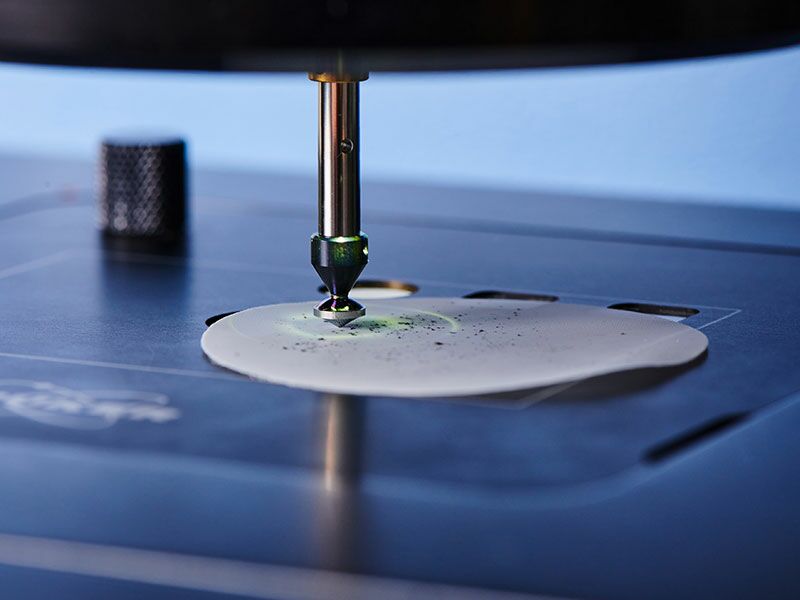
Contact us –
expert support is just a conversation away.
Using state-of-the-art analytical methods, we assist you with quality issues, damage claims, and development challenges – providing precise, well-founded, and solution-oriented support.

FTIR Spectroscopy
at Quality Analysis
- Identification of polymers and plastics, elastomers, adhesives, and coatings, as well as comparison of unknown materials and samples
- Analysis of additives, fillers, and degradation products, in combination with other analytical methods as needed
- Examination of particulate contamination for the identification and characterization of organic particles
- Analysis of filmic contaminants and residues directly on component surfaces
- Identification of unknown deposits, residues, and inclusions, e.g., in cases of material deviations or damage
- Combination with complementary methods such as Raman spectroscopy, light microscopy or thermogravimetry for further investigation
Structure of an FTIR Spectrometer
An FTIR spectrometer is based on a Michelson interferometer. An IR radiation source generates infrared light, which strikes a beam splitter and is split into two beams. One beam is reflected by a movable mirror, the other by a fixed mirror. The two beams then meet again and produce interference through their superposition.
The light is then directed onto the sample to be analyzed, whose molecules absorb certain components of the IR radiation. The remaining radiation is detected by a detector and initially displayed as an interferogram. Using the eponymous Fourier transform, this is then mathematically converted into an IR spectrum.
What measurement modes are available on an FTIR spectrometer?
In FTIR spectroscopy, there are three different measurement modes:
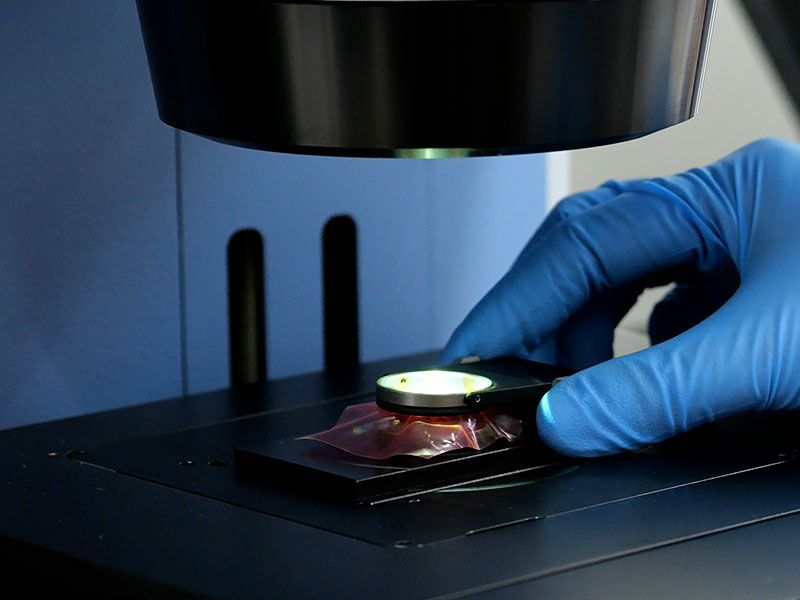
Transmission method
The transmission method does not require any further preparation of the spectroscope. The only possible preparation is that it is often necessary to prepare the sample in film, gauze or similar. Then the sample is placed in the IR beam and the measurement undertaken as described above.
This type of measurement is suitable for thin, liquid and transparent samples, among others, thermoplastic and water-soluble polymers, polymer films, powders, gases and liquids. Because the transmission method is also the most traditional form of measurement, there exist many standard work instructions with the aid of which it is easy to implement quantitative measurements.
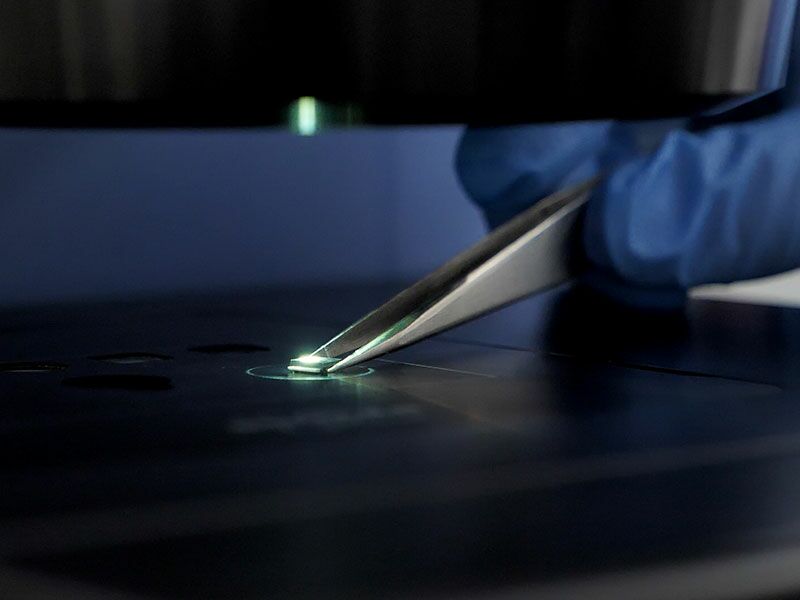
Reflection mode
With the reflection method (real directed reflection or reflection/absorption) the energy that passes through the sample is not measured, instead the energy that is reflected by the sample is measured. Each sample is characterised by a specific refractive index; the rate of change of this index during reflection varies in the different frequency bands. By testing the bands with a large change in the refractive index, conclusions can be drawn as to the absorption of the sample.
This very sensitive method provides high-quality data and is therefore used, for example, for analysing metallic surfaces, silicon wafers and in general for smooth, reflecting surfaces.
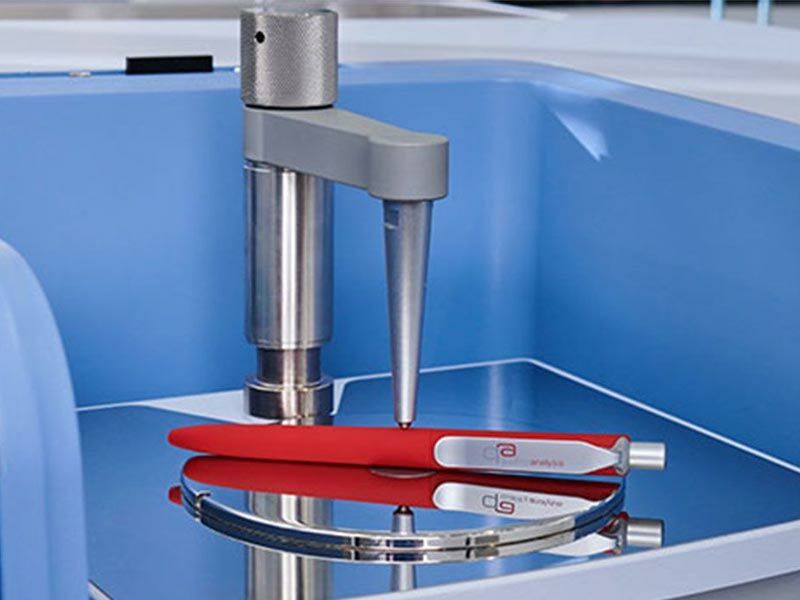
Attenuated Total Reflection (ATR)
In ATR measurement, the IR beam is reflected in an optically dense crystal. This generates evanescent waves that interact with the sample and are attenuated in the absorbed spectral regions. The remaining beam is then detected by the detector.
Since only the near-surface region of the sample is detected, the sample thickness is largely irrelevant. ATR is therefore particularly suitable for thick or highly absorbent samples such as plastics, rubber, paints, laminates, or liquids. Another advantage is the minimal sample preparation required.
Five Advantages of FTIR Spectroscopy
Compared to other methods, FTIR spectroscopy offers a whole range of advantages, which is why it has become the standard method in IR spectroscopy over the past few decades.
1. Throughput Advantage
Compared to dispersive spectrometers, the light throughput is significantly higher, since FTIR spectrometers can use circular apertures instead of slit apertures. This increases the light yield by up to 200 times, which in turn leads to a significant improvement in the signal-to-noise ratio .
2. Greater Accuracy
Since FTIR spectroscopy uses a helium-neon laser as a reference, the accuracy of the frequency and wavelength axes is significantly higher than in conventional dispersive infrared spectroscopy.
3. Multiplexing advantage
Because an interferometer is used during FTIR spectroscopy instead of a diffraction grating, all wavelengths in the pre-defined spectral range are measured at the same time. This situation again improves the signal to noise ratio, also thanks to this characteristic so-called fast scanning FTIR spectrometers can be designed that permit significantly faster measurements.
4. Higher speed
Thanks to the advantage of multiplexing, scans with the FTIR spectrometer can be undertaken in fractions of a second. This feature permits not only the quick analysis of numerous samples one after the other, it also permits the study of dynamic processes in realtime.
5. Robustness
Modern FTIR spectrometers are comparatively robust, compact units, for this reason they are also suitable for mobile use.
FTIR Spectroscopy in Practice
Due to its unique advantages, FTIR spectroscopy is primarily used as a spectroscopic method in chemical analysis of organic substances, as it provides information about the presence and concentration of functional groups.
Plastics Industry
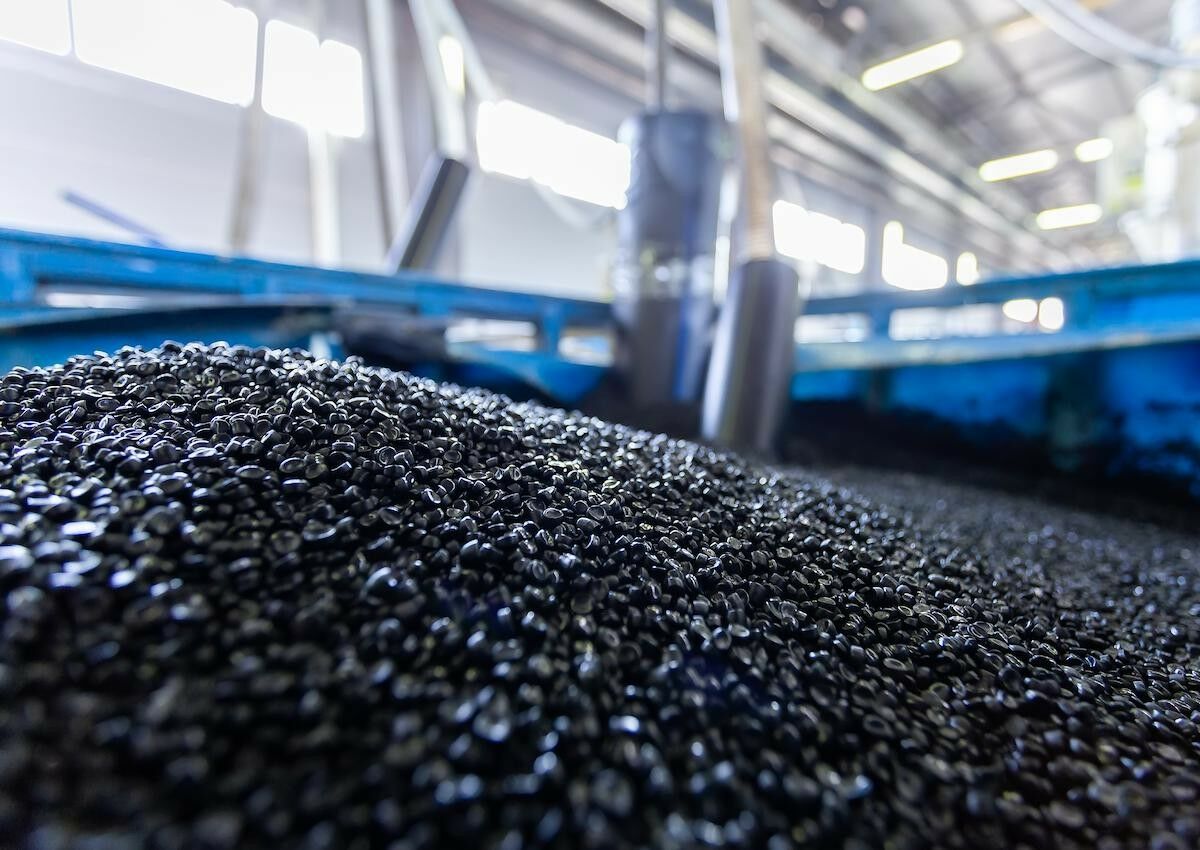
FTIR spectroscopy is suitable for the identification and characterization of polymers and plastics. It also aids in material comparisons and in the investigation of impurities and material deviations.

Automotive
In the automotive industry, FTIR is used in particular to identify particulate and film-like contaminants. For example, it can be used to analyze organic residues such as oils, greases, cleaners, or lubricants on component surfaces.
Medical Technology
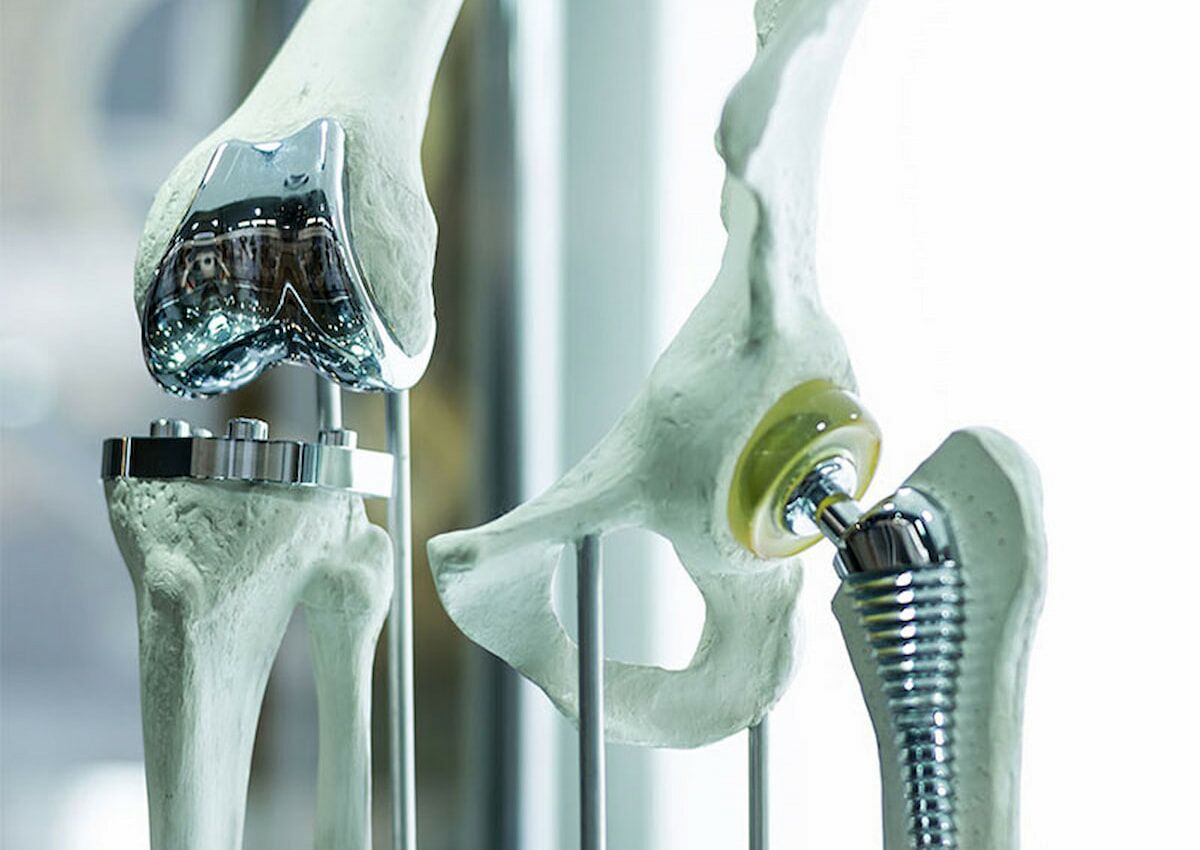
In the field of medical technology FTIR aids in the characterization of plastics and polymer-based components, as well as in the analysis of particles and filmic residues. FTIR spectroscopy is also one of the methods used in plastics analysis for pharmaceutical packaging.
Electronics Manufacturing
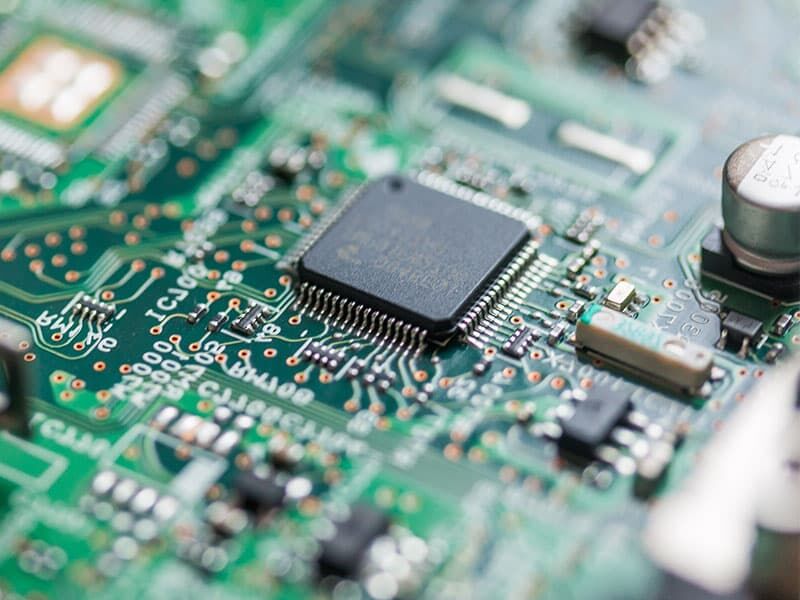
In electronic assemblies, FTIR is primarily used to analyze organic residues, particles, and process contaminants. Spectroscopic methods help identify contaminants on printed circuit boards (PPCBs) and component surfaces and pinpoint material or process deviations.

Toys & Baby Products
FTIR spectroscopy can be used to identify plastics, elastomers, coatings , and adhesives. It is also suitable for material verification and for analyzing unknown substances, contaminants, and material deviations.

Packaging Industry
In the field of packaging, FTIR is particularly well-suited for identifying and comparing polymer-based materials, as well as for analyzing unknown material components or deviations. This is especially relevant for plastics, films, composite materials, and coatings. Your packaging page already covers these material groups, but does not currently explicitly mention FTIR as a method.
Summary: FTIR Spectroscopy
FTIR spectroscopy is a versatile method for identifying and characterizing organic materials and substances. Among other things, it is used to identify polymers and plastics, compare materials, and analyze impurities, residues, and unknown substances. FTIR thus supports material testing, quality control, and root cause analysis in numerous industrial applications.